


When people say I was brave to start a company in those circumstances, I smile and say thank you, and I do not correct them. But the correction is this: I was not the brave one.

The bonsai was dead when I went to throw it away.
Or I thought it was. I had been neglecting it for months, the way you neglect things you suspect you’ve already lost. It was a gift, a little tree in a little pot, and I had tried. I had tried the way a person in their twenties tries, which is to say intermittently and without a system, even though my family was littered with people who had actual degrees in agriculture and horticulture. This was clearly not my strength. I named it treetree because everything small deserves a name that tells you it's small. The tree died anyway. (Or seemed to.)
I looked at it the day Tiffany and I decided to start a “six-month experiment” and start a business during a time when getting a job had lesser odds of success. I was about to put it in the trash. Then I looked again. There were buds on the branches, small green ones, the size of a pencil eraser. The tree had decided to come back while I wasn’t paying attention. It was a sign! The little tree that could. I hesitantly told Tiffany we should call the agency treetree, half expecting her to think I was crazy. She didn't. She loved the name.
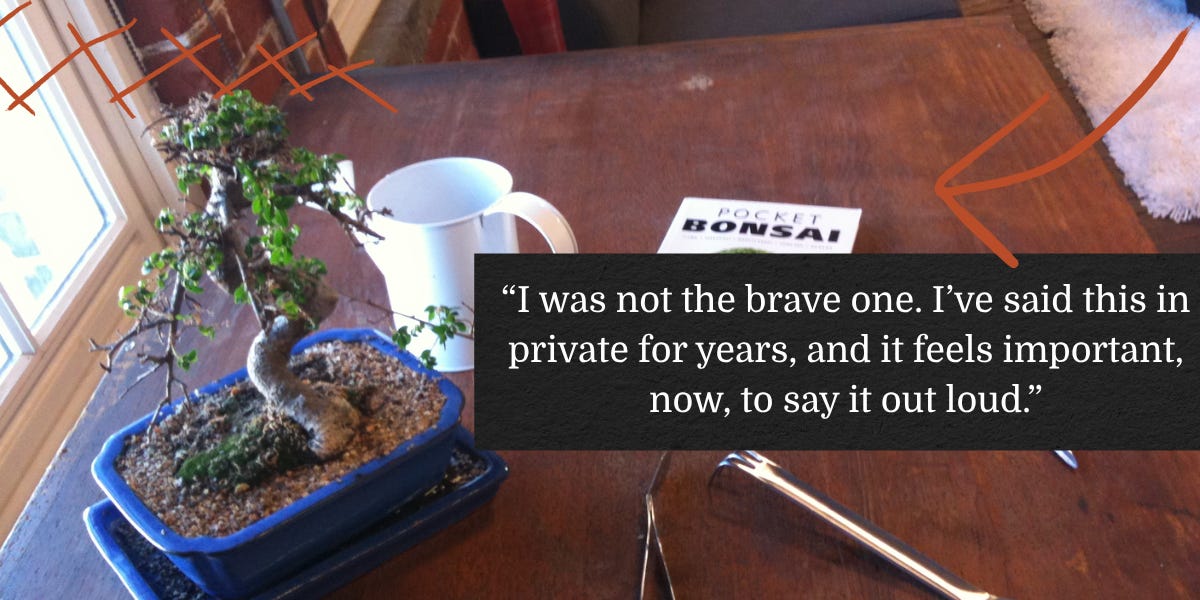
This is the part of the story I have told in interviews and podcasts and essays. This is the clean version. The bonsai as resurrection metaphor, the agency as Phoenix, the founder as someone who recognized a sign and followed it. It’s a story I believe in, mostly. It’s also a story that leaves something important out.
It was 2009. I was twenty-seven. I had lost my job in The Great Recession, called off my wedding, and filed for personal bankruptcy after realizing the two pieces of real estate I had purchased only a couple years prior could not be sold, nor could I afford to keep them. I had no home or car in my name. I was, to put it lightly, a mess. Living on roughly seventeen thousand dollars a year with two Buck Chuck from Trader Joe’s and drugstore-brand box dye for my hair. I remember strategically inviting myself to dinner at my parent’s house when the grocery budget was too tight. I had nothing to lose because I had already lost it.
Tiffany had a family to support. She had a husband and two very small children and a mortgage and a life that was intact, and she walked away from her job to start something with a twenty-seven-year-old who had nothing in her name. If it failed, I would fail back to zero, which was already where I was. If it failed for her, she would fail down from somewhere, into a hole with other people in it.
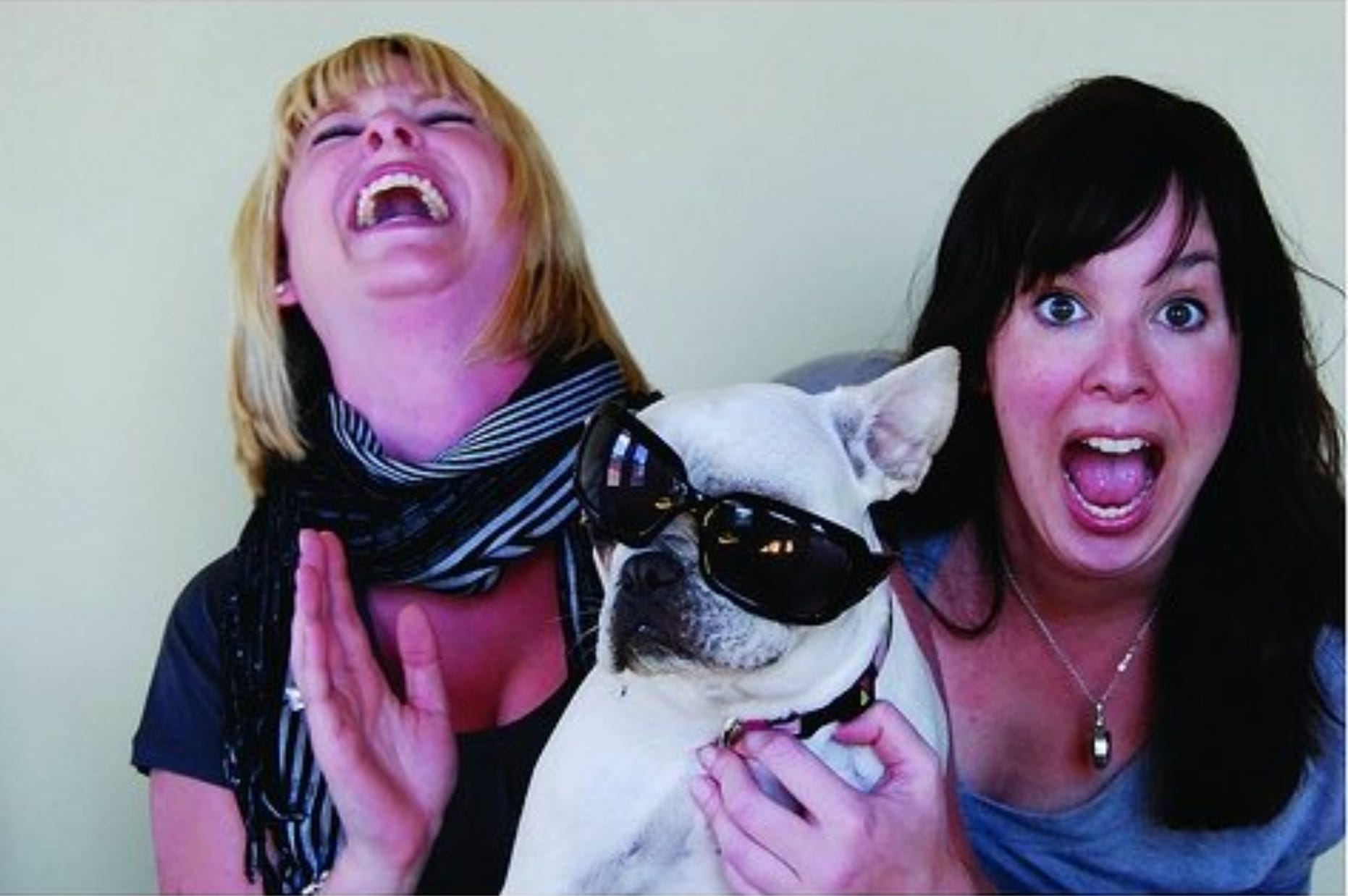
I have watched the retelling of this story flatten over the years. Two women at a dining room table, scrappy and determined, making something from nothing. But the two of us did not have the same nothing. My nothing was light even though it felt heavy, while hers had real weight.
What we call brave in retrospect is often something else in the moment.
Sometimes it is fear that has run out of other options. Sometimes it is a lack of awareness about how bad things could actually get. Sometimes it is being twenty-seven and assuming the floor will hold the weight of your messy life because the floor has mostly held up so far. That was me.
Real bravery, I’ve come to think, requires knowing what you would be losing. I didn’t, but tiffany did.
She wasn’t loud about what she had to lose. She didn’t talk about what she was risking in a way that asked for acknowledgement, and for years I didn’t give it to her, because I didn’t really see it. I thought we were doing the same thing. We weren’t, at all.
We spent the next six years, more or less, in each other’s company. I have told people — on a podcast, in a prep document, in private — that I spent more time with Tiffany during that stretch of my life than with any other human being. More than my husband. More than my parents. More than my children, once they came.
You can’t know a person the way you know a co-founder. You know them the way you know a road you drive every day. You stop noticing them because they are the given.
Partnerships end, eventually. Most of them. Not because someone did something wrong but because the weight of a business shifts, or the life a person wanted changes, or two people who made something together are ready to want different next things. Ours ended.
Neither of us write much about the end of it. The public version is that I continued on and she moved on, and both of those sentences are true, and neither of them is the whole thing.
The whole thing I’ve never shared is that I grieved her while she was still alive.
I recently found a Vistage update I wrote one May: there is the grieving and saying goodbye to a friend and colleague I’ve worked with for a decade, and I kept going. It was the most honest I could be in that document. It was also about one percent of what I actually felt.
I’ll let you in on something most don’t realize about co-founder partnerships that end: you do not get a ritual to close that circle. You get a press release and a transition plan and a careful sentence about continuing to wish each other well. And then a pile of to-dos to plow through to move the company forward. The thousand+ hours of decisions you made together — in cars, on floors, at airport gates, over lukewarm coffee and too much wine — become private. A sealed room only two people have access to.
I still have access to ours. So does she. Neither of us talks about it much. That’s also a kind of holding.
The bonsai, by the way, did not live forever. It died eventually, a second time, for real. I don’t know where it is now. Probably thrown out by someone clearing an office during one of the many moves.
The bonsai came back once. That's what mattered. The question of whether it was really a sign — whether my noticing of the buds was cause or coincidence — has never interested me. What interests me is that I needed a sign and gave myself one. And that Tiffany, who needed more than a sign to walk into that kind of risk, walked in anyway, with me. I’ll always love and admire her for that.
I was not the brave one. I have said this in private for years, and it feels important, now, to say it out loud.
If you are reading this and you were ever the brave one in a partnership where someone else got the loudest part of the story, I see you. That is not nothing.

I am so thrilled to be subscribed to this and that you're writing here! Thank you for this piece. I can relate a lot having parted with business peers in the past.